Showing posts with label GFCF. Show all posts

5.16.2009

My Kid Has Autism: Now What?

If your child has recently received an autism diagnosis, you're going to want some answers to your questions: Why? What can I do? What does this mean for his or her future?

You really won't know until your child's diagnosis is complete. If that diagnosis is based purely on a pediatrician's screening or a developmental evaluation, then it is only partial. You need to find out if there are any genetic or neurological components, seizure activities, or brain abnormalities contributing to your child's autism.

You need a referral to a pediatric neurologist.

Your pediatrician may not make this referral on their own, because regular pediatricians are not always aware of the extent to which autism and autistic-like conditions should be evaluated. If you are not given this option, you'll need to press for it. (Another potential fight, I know.)

We were lucky. Leo's pediatric neurology referral was part of his evaluation at the Stanford Autism Clinic. The clinic staff referred us to an on-campus pediatric neurologist. This is what that doctor recommended for Leo:
  1. A genetic workup to rule out any of the many chromosomal conditions that can lead to, be comorbid with, or mimic autism.
  2. A pediatric neurology assessment, including a general exam and family history.
  3. An EEG to monitor our son's brain for irregular electrical activity (some kids diagnosed with autism actually have seizure disorders).
  4. An MRI to look for structurual abnormalities in the brain, such as demyelination.
The EEG was a struggle, but the MRI was done under general anesthesia so logistically if not emotionally easier.

The results: of course my son had no chromosomal or brain structure abnormalities. He had a bit of irregular electrical activity, but it was consistent with patterns seen in other autistic people.

The tests didn't tell us why Leo has autism, but they did rule out many potential causes and typical physiological issues. With no answers, no more "but what if he has?," our faith about continuing to pursue 1:1 behavioral therapy -- the only proven method for helping kids like Leo -- was renewed.

Organizations like Generation Rescue proclaim to know why your child is autistic, and what you can do: let them rescue your child from autism! Unfortunately they are full of shit, though not intentionally. While a small subset of children may in fact be helped -- though there is not yet any unbiased evidence supporting this claim -- "We might be able to help your child a little bit if you're one of the lucky ones" doesn't rally frightened parents like "We can cure your autistic child!" does.

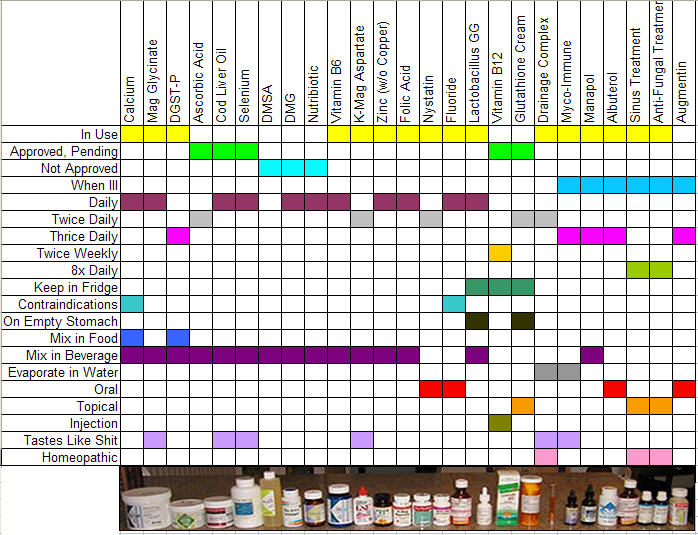
The bulk of GR's focus is not on detailed diagnoses or helping to gain skills, but on these biomedial and dietary "cures." I think most of the biomedical supplements Leo used to take were a racket.

Some do have merit. Leo still takes daily doses of cod liver oil, calcium, probiotics (though we're tapering those off), and autism-specific multivitamins from Kirkland Labs. We retained those only after consulting with a medical dietician about properly supplementing my son's self-limited diet.

And while I think there's no harm in trying the GFCF diet (even though it didn't work for us), you need to know that it is a lot of work, especially during the initial transition from a regular diet, and because so many autistic children have limited diets anyhow. You also need to be serious about it for at least one year.

Even before your child's autism diagnosis is complete, you need to decide how you're going to help your autistic child make sense of this world. Behavioral therapy is the best choice, and you can do it *even if* you decide to swallow Generation Rescue's very expensive pills. But if you have to make a choice, put your money (or your school district's money) on the approach based on evidence, not testimonials.

5.14.2009

Not a Huge Fan: Autism and Biomedical Interventions

A mom from a local, general parenting egroup sent out an email about her new naturopath, and mentioned that "he treats autistic children, too." This doctor just happens to be Leo's former DAN! doctor, Dr. Prattle. Here was my response:

Dr. Prattle is an advocate of the scientifically unsubstantiated "biomedical" approach to treating autism, which involves dietary modification as well as enormous quantities of supplements, creams, injections, and sometimes chelation to remove heavy metals. It is an incredibly intensive and expensive endeavor.

He also makes recommendations for his autistic patients' sensitivities to be treated through a technique called Bioset, of which his wife is a practitioner, and to whom he refers patients -- a ethically questionable practice, but not one that families in shock from an autism diagnosis are likely to question.

The only proven methods for helping kids with autism gain skills are individualized 1:1 therapies, like Applied Behavioral Analysis, Floortime, or RDI. These are also intensive and expensive. Families with newly diagnosed autistic children might want to reserve their energies for methods proven to help their children, and explore biomedical interventions only if they have the extra resources.

Now, I personally know at least two families who swear that Dr. Prattle has made a difference for their children. I know many others who swear by the dietary modifications, such as the GFCF (wheat-free, dairy-free) diet. [Note: Dr. Prattle's testing revealed one of these children to be truly sensitive to wheat and dairy. The same testing showed no such sensitivities for Leo, but Dr. Prattle recommended that we pursue full-fledged biomed/dietary approaches anyhow "because some sensitivities just don't show up on tests."]

I also know that my son's ABA team, who have been working with severely autistic children for ten and even 20+ years, swear that they have never seen any any benefits from Biomedical interventions. [Note: This opinion was given to us six years ago, when we were starting Leo's home ABA program. His team knew that Biomed is mostly time-consuming rather than harmful, and trusted that we'd find our own way eventually.]

If you or anyone you know is reeling from a child's autism diagnosis, the best thing to do is start making connections in your new (and totally ass-kicking) special needs parenting community. Join local special needs parenting boards (e.g., http://groups.yahoo.com/group/peninsulaparentssnk/), join local parenting support groups (like our own SEPTAR, www.septar.org), and read the blogs of people in the autism community, especially those of parents who've been there before you and have made peace with -- and love -- the child they have, rather than the child they thought they would have.

Bubbly Leo
Most importantly: do not let fear override your gut when it comes to making the best decisions for your child.

Please feel free to contact me, or have your friends contact me, if you have any other questions. I mean that sincerely.

5.13.2009

The ExplOratorium Gets All the Gold Stars

Two days ago, San Francisco's Exploratorium hosted an exploratory Autism/Aspergers Family Night. The goal was to help ascertain the needs of certain Exploratorium-adoring families who can have a hard time being *at* that wonderful science center, and how best to accommodate said families when the Exploratorium moves pierward in 2012.

Admission was free. The event was fantastic. Leo and the girls frolicked. I was floored -- and so, so grateful. I've never seen a non-autism organization put so much effort into meeting the needs of my son and his friends. My faith in humanity has been restored.

There are so few places we can go as a family where Leo will enjoy himself, and where we needn't worry about a scene if his enjoyment ceases. Hiking, swimming, the Monterey Bay Aquarium on a slow day, the Arboretum ... that about covers it. There are many places Leo tolerates, but few in which both he and his sisters get to have fun.

At this event, our entire family got to have fun. Unbridled, rambunctious, kooky fun. Hours of it.

Whole-Family Fun at The ExplOratorium

This success didn't come without significant, almost herculean effort to accommodate Leo and his friends. The Exploratorium brought in Bryna Siegel and her UCSF Autism Clinic crew to plan, and to staff. (Side note: It was amusing to see Ms. Siegel instructing Mali on using an exhibit properly; autistic and defiant behaviors can both be handled with similar techniques.) Exploratorium staff also volunteered their time.

As a very thoughtful bonus, dinner and snacks were provided, and they were mostly GFCF. Representatives from both Mariposa Baking Company and Acre Catering donated their time to serve the food, which was all super-healthy and delicious -- Seymour and I tucked in. Unfortuntely our picky boy only liked the toast wedges, but I always bring food for him so it was no problem.

Fortunately and un-, they limited the number of attendees. I feel for the numerous families who had to be turned away, I really do -- especially because I know several of them. But limited attendance also meant a relatively mellow audioscape (they provided earplugs for the truly sensitive) and lots of personal space, and no typical Exploratorium crowds or noise -- so no overwhelm and resulting acting out. It was thrilling to see Leo running around, exploring, and investigating without us having to worry about him bumping into people or stomping on toddlers.

Leo Befuddled by Reversed Audio Input

Leo explored like crazy. He loved being in a space full of manipulables that were all about tactile, audio, and visual feedback. (He was also excited about "going on an airplane?" because he thought the hangar-like space was an airport. We spent a lot of time explaining that we were already at our destination.)

My son's experience was made even easier by the planners, who understood that Leo and his friends are not all alike in their needs and interests, and planned three different pathways/walks: sensory-based, reading-based, and an organization-centric. Each path came with a map, each station on the path was marked with color-coded balloons. The staff gently encouraged but did not interfere, and the kids the interacted with exhibits in their own ways. Leo, for instance, was as happy to play with sand wherever he found it, inside or outside the exhibits.

OooooOOooOoooh: Sand on a Spinning Wheel

Leo absolutely loved the Exploratorium, and so did his sisters. But we might never have risked a visit, had we not been given the gift of Autism Family Night. The staff said that it's not as busy in the late afternoons. We just might show up.

Exploratorium staff, you have my sincere thanks and gratitude. Please say you'll do it again!